
Artificial Intelligence is transforming the way we create visuals, and one of the most exciting tools in this space is Google Gemini. Whether you’re a content creator, marketer, designer, or just someone who loves experimenting with AI, learning how to craft the perfect AI photo prompt can unlock incredible creative possibilities.
In this guide, you’ll learn how to write effective prompts for Gemini, tips to improve your results, and examples to help you get started.
Dramatic Red Silhouette Portrait with Double Exposure
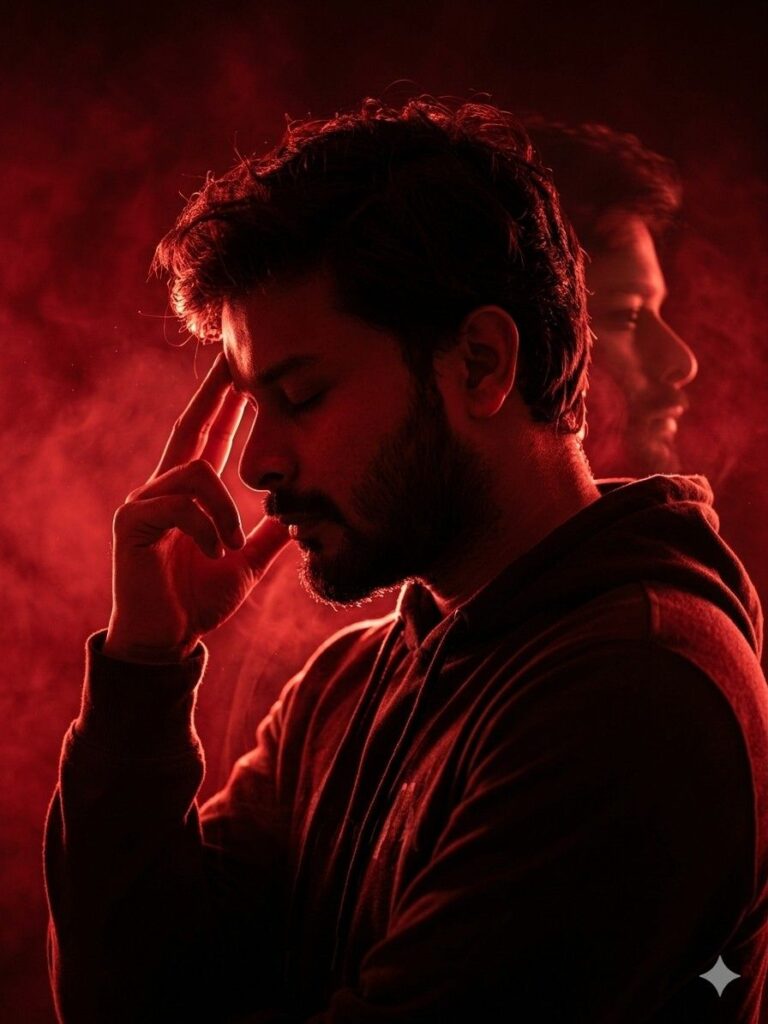
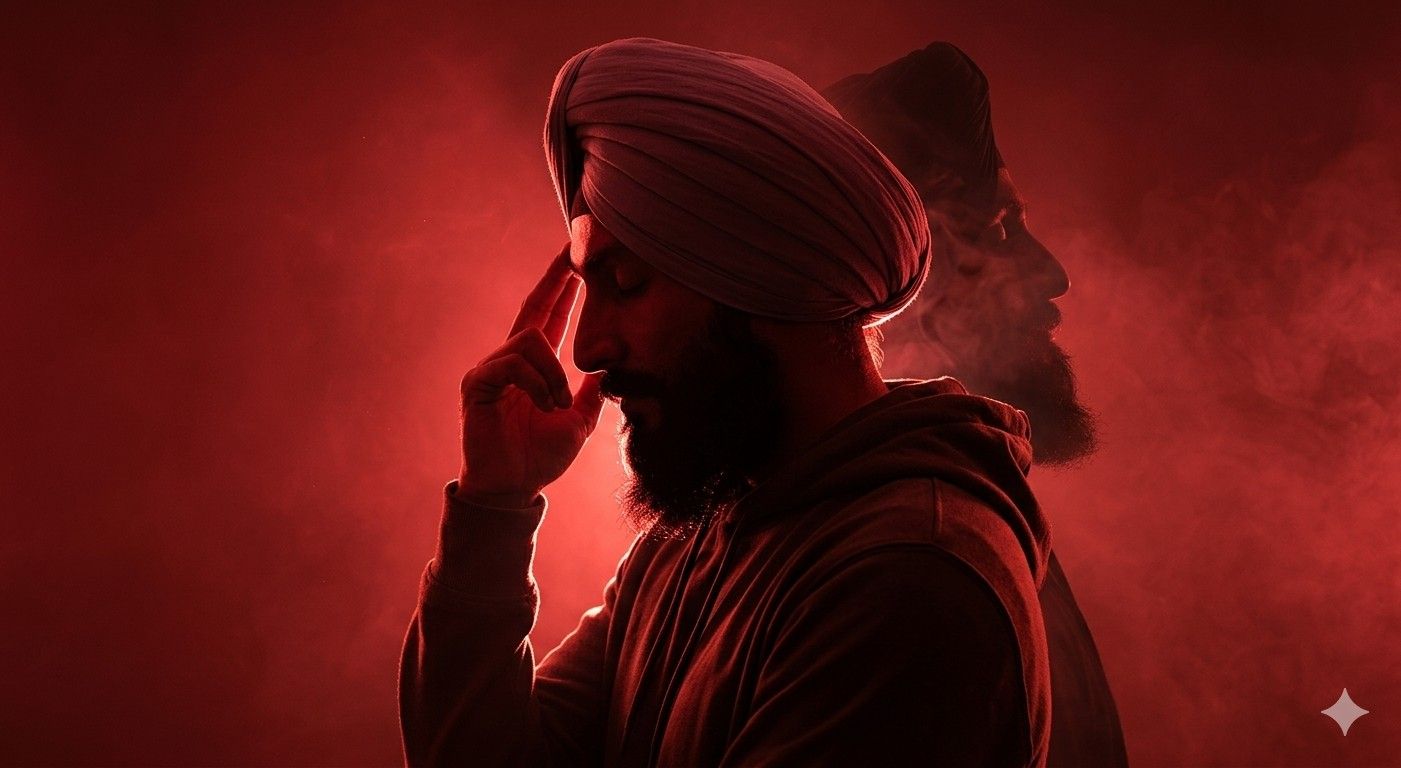
Generate an Ultra-cinematic dramatic red silhouette portrait of a young man in side profile, captured from the shoulders up, standing in a contemplative pose. The man has messy textured hair and a short rugged beard, ( keep face and hair style 100% same as in uploaded image) wearing a casual dark hoodie with soft fabric folds and realistic cloth texture. His eyes are closed and his fingers gently touch his temple, suggesting deep thought, emotional tension, or inner conflict.

The lighting is extremely dramatic monochromatic red cinematic lighting, creating a powerful high-contrast visual style. A bright red backlight outlines the man’s silhouette, producing glowing rim light along his hair, face profile, beard, and hoodie edges. The front of the figure remains mostly in shadow, creating a deep black silhouette with subtle red highlights.

Behind him appears a large ghostly double-exposure shadow of the same person, facing the opposite direction. This secondary silhouette is slightly blurred and darker, creating a psychological duality effect, symbolizing inner thoughts or conflict. The layered composition creates depth and visual storytelling.

The background is minimalistic and atmospheric, consisting of a smooth red-to-dark gradient with soft volumetric haze and drifting smoke particles surrounding the figure. The smoke catches the red lighting, creating glowing mist around the silhouette.

Hair strands, beard texture, hoodie fabric fibers, and skin contours are subtly visible through the dramatic lighting, adding hyper-realistic detail. The lighting creates strong chiaroscuro contrast, emphasizing the emotional and cinematic mood.

Composition follows professional cinematic portrait framing, with strong negative space and balanced silhouette placement. The scene feels like a movie poster or psychological thriller artwork.

Shot as if using a cinematic 85mm portrait lens, f/1.8 aperture, extremely shallow depth of field, with soft atmospheric diffusion and volumetric lighting.

Style keywords:
ultra-realistic cinematic lighting, dramatic red color grading, double exposure portrait, psychological mood, moody atmosphere, volumetric fog, glowing rim light, high contrast shadows, digital art realism, film still aesthetic, hyper-detailed textures, HDR lighting, depth and atmosphere, cinematic composition.

Quality tags:
8K resolution, ultra-high detail, photorealistic rendering, cinematic masterpiece, studio lighting quality, Unreal Engine / Octane render quality, ultra sharp focus, professional color grading.What is Google Gemini AI Photo Prompt?
A photo prompt is a detailed instruction you give to an AI model to generate an image. In tools like Google Gemini, prompts act as the foundation for the image creation process.
Also Read-Raja Shivaji (2026) Movie Review & Box Office Collection: A Grand Tribute to the Maratha King
Instead of simply typing “a cat,” you can guide the AI with more detail like:
“A fluffy white cat sitting on a windowsill during sunset, soft golden lighting, realistic style, 4K resolution.”
The more descriptive your prompt, the better and more accurate your AI-generated image will be.
Why Prompts Matter in AI Image Generation
AI doesn’t “see” images the way humans do—it interprets language. That means your word choice directly impacts the output.
A strong prompt helps you:
- Get highly accurate results
- Control the artistic style
- Reduce randomness
- Save time on revisions
A weak or vague prompt often leads to unexpected or low-quality images.
Key Elements of a Perfect Gemini Photo Prompt
To create stunning visuals, your prompt should include the following elements:
1. Subject Description
Clearly describe what you want in the image.
Example:
- “A young woman”
- “A futuristic robot”
- “A mountain landscape”
2. Details and Attributes
Add specifics like colors, emotions, or actions.
Example:
- “A smiling young woman with curly hair wearing a red dress”
3. Environment or Background
Set the scene for your image.
Example:
- “Standing in a sunflower field during sunset”
4. Style and Mood
Choose the artistic style or tone.
Examples:
- Realistic
- Cartoon
- Cinematic
- Vintage
- Fantasy
5. Lighting and Quality
Enhance visual appeal with technical details.
Examples:
- “Soft lighting”
- “Ultra HD”
- “4K resolution”
- “Golden hour lighting”
Example Prompts for Google Gemini
Here are some ready-to-use examples:
Basic Prompt
“A dog in a park”
Improved Prompt
“A golden retriever playing in a green park, bright sunlight, realistic photography, high resolution”
Advanced Prompt
“A golden retriever running through a lush green park, sunlight filtering through trees, cinematic lighting, ultra-realistic, 4K quality, shallow depth of field”
Notice how each version becomes more detailed and visually rich.
Tips to Write Better AI Photo Prompts
Be Specific, Not Vague
Avoid generic prompts. Instead of “a house,” write:
“A modern glass house in the mountains with snow-covered peaks”
Use Descriptive Adjectives
Words like dramatic, soft, vibrant, dark, dreamy can significantly improve results.
Add Artistic Styles
Mention styles like:
- “Oil painting”
- “Watercolor”
- “Photorealistic”
- “Anime style”
Experiment and Refine
Don’t expect perfection on the first try. Adjust your prompt and test variations.
Keep It Structured
Follow this simple formula:
Subject + Details + Environment + Style + Quality
Common Mistakes to Avoid
Even experienced users make mistakes when writing prompts. Here are some to watch out for:
Overloading the Prompt
Too many conflicting details can confuse the AI.
Being Too Short
Short prompts often lead to generic results.
Ignoring Style
If you don’t specify style, the AI chooses one randomly.
Lack of Clarity
Ambiguous descriptions can produce unexpected outcomes.
How Google Gemini Stands Out
Compared to other AI tools, Google Gemini offers:
- Advanced language understanding
- Better context interpretation
- High-quality image outputs
- Seamless integration with other Google services
This makes it a powerful option for both beginners and professionals.
Use Cases for Gemini AI Photo Prompts
You can use AI-generated images for:
Content Creation
- Blog visuals
- Social media posts
- Thumbnails
Marketing
- Ads
- Product mockups
- Branding visuals
Personal Projects
- Digital art
- Wallpapers
- Creative experiments
Conclusion
Mastering Google Gemini AI photo prompts is all about clarity, creativity, and experimentation. The better you describe your vision, the more stunning and accurate your AI-generated images will be.
Start simple, refine your prompts, and gradually add more detail. With practice, you’ll be able to create professional-quality visuals in seconds using Google Gemini.
FAQs
1. What is a Gemini AI photo prompt?
A Gemini AI photo prompt is a text instruction used to generate images using AI by describing the subject, style, and details.
2. How detailed should my prompt be?
The more detailed your prompt, the better the output. However, keep it clear and avoid unnecessary complexity.
3. Can beginners use Google Gemini for image generation?
Yes, beginners can easily use it. Start with simple prompts and improve gradually.
4. What styles can I use in prompts?
You can use styles like realistic, cartoon, anime, cinematic, watercolor, and more.
5. Why is my AI image not accurate?
This usually happens unclear or vague prompts. Try adding more details and refining your description.
1 thought on “Google Gemini AI Photo Prompt: A Complete Guide to Creating Stunning AI Images”